
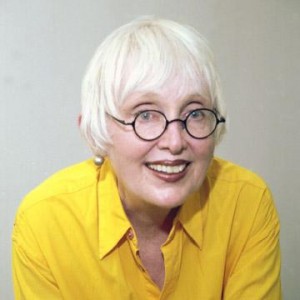
Carolyn Howard-Johnson is an award-winning novelist, poet, and author of the acclaimed HowToDoItFrugally series of books for writers. With nearly three decades of retail experience—and many more in the fields of journalism, public relations, publishing, and marketing—she consults in the three Ps: publishing, promotion and publicity.
Carolyn previously shared her “Seven Rules for Writing Your Book Proposal” on Write On! Online. Plus, her book—Great Little Last-Minute Editing Tips for Writers: The Ultimate Frugal Booklet for Avoiding Word Trippers and Crafting Gatekeeper-Perfect Copy—is one of the prizes in this month’s Write On Challenge: Write a Limerick! Details here.
Carolyn Howard-Johnson and Write On! Online are part of the VBT – Writers On the Move Blog Tour. Please check out the VBT Website for more exciting author interviews and expert columns!
How did you become the “Frugal Maven”?
That makes me laugh. I guess I was raised by a Great Depression-era mother. I was environmentally sound before anyone head the word “environment.” Back a ways, we were just called “cheap.”
How important is it for a writer to have a niche?
A couple of years Chris Anderson had a book on the NY Times Bestseller list that made the term “long tail” practically a household name. It’s not the most attractive or descriptive term, but it describes an economic model made easier by the appearance of the Internet. That is, one could hone in on products that appealed to a smaller niche audience and thus make the product more effective and, obviously, the audience more receptive to it. Such products played to their specific needs. They are very practical, indeed. And books are one of those products especially suited to it. Now, the big publishers said, “Why would I want to do that? I’ve got a lot invested in each book and want the widest audience possible for each.” But some of us entrepreneurs said, “Hey, we just want to provide what people want, what will help them the most!” And most of the entrepreneurs could see that if we have lots of niches and we’re serving each niche better, we can actually make more money and get more satisfaction out of what we’re doing.
So my broad niches are how-to books for writers, how-to books for retailers, fiction and poetry. Not necessarily in that order.
These books break down into smaller, even more practical segments. For writers I have a book on Promotion, one on Editing, and an Amazon Short on book proposals. I have tons of tiny niche ideas up my sleeve. I won’t live long enough to do them all.
That’s the long answer. LOL. The short answer is, yes. But writing should also be creative, so if you have more than one niche that interests you, why not pursue them? Promotion is a bit more difficult, but it’s possible.
Why did you write The Great First Impression Book Proposal: Everything You Need To Know To Sell Your Book in 20 Minutes or Less. And why the long title?
My titles are getting longer and longer. That’s also because of the influence of the Internet. Titles are like buying real estate from the online bookstores. They give you more room for keywords that relate to your book. That increases the likelihood of someone finding your book from a variety of searches they might do on the Amazon search engine (or any other search engine). So for this book, I wanted these words most likely to be used by people searching for the categores this book covers: “editing,” “writers,” “copy,” and, of course, my most obvious branding word, “frugal.” I still missed iterations of “writers,” like “writing;” I missed “homonyms” (because that word scares people); and a few others I would have liked to get include like “wordiness.”
What is your favorite part about being a writer? The greatest challenge?
The challenge is finding the time because I love it all so much. I love writing fiction, poetry. I love promoting. I love teaching. I love editing. And I do work long hours to pack it all in. It’s not work. It’s play.
What are the first three steps a writer can take to develop their own promotional platform?
The first big one for many writers is understanding that they really, really, really do need to promote.
The second is understanding branding (read The Frugal Book Promoter: How To Do What Your Publisher Won’t), so we don’t spin our wheels doing stuff that isn’t a fit and doesn’t work.
The third is knowing thyself. Of all those things that can be done, which ones fit with your personality well enough that you’ll stick with it? That’s because no promotion works in a flash. No promotion works by itself. Great marketing (especially now we have the Web) is interactive and interlinking. And it builds, builds, builds.
Why and in what ways have ebooks become an additional option for writers looking to get published?
When I owned retail stores, we had a motto: “Do not tell a customer what they want or need; let them tell you what they want or need.” Cash-only stores are rare these days, but when we see them, we know they have put themselves at a disadvantage. As authors, we have a product, too. We shouldn’t tell people they can only buy our books one way, in paper. Lots of people have lots of different reasons for wanting to buy books in other formats. They travel and want to carry their readers (devices like Sony or Kindle). They want a fast download. They want a book cheap. They even may like reading on a screen. Ours is not to question but to provide.
Having said that, I am often amazed at how many writers publish only in the e-book format. That seems to be carrying niche marketing too far. I see only one reason to do that: A book is about tech and tech changes every two-and-a-half seconds. E-books are easy to update every second if need be. But fiction and most nonfiction? They’re turning niche marketing on it’s ear by taking something that doesn’t have a niche market and turning it into a niche product.
How do you feel about collaboration between writers?
I’m doing it. I have a book being shopped by an agent that I’ll be writing with a partner. It isn’t easy. I have a friend who says,”I am not by nature collaborative.” She wouldn’t be a good one to write a book with another writer.
Advice for poets?
Love what you do. You might win a big prize. You might become poet laureate. But don’t do it for those reasons. I was floored when one of my poems won a really large cash prize recently. I usually get a byline and two copies of a journal for my poems. Poetry is about love.
Advice for non-fiction writers?
Know your market, the need, and the niche before you start writing. Hire a GREAT cover designer (notice I didn’t say artist or graphic designer, I said COVER designer!). Non-fiction is one of the best ways to make some good money by self publishing. But to do it, you’ll need to learn lots about formatting, editing, indexing, frontmatter, backmatter. I advise you to read The Frugal Editor; it will help you decide if you’re cut out for all that stuff. If not, it will make you a better partner for someone you hire to do it—or for whoever a traditional publisher assigns to you. Basically, the more we know about the whole publishing industry, the better equipped we are to mange our own writing careers.
What do you know now that you wish you knew when you first started writing?
That no editor, no publicist, no marketer, no publisher, no agent will ever be as passionate about my books as I am. If we aren’t proud of our own books, who will be?
Tags: Author Q&A Carolyn Howard-Johnson eBooks Great Little Last-Minute Editing Tips for Writers: The Ultimate Frugal Booklet for Avoiding Word Trippers and Crafting Gatekeeper-Perfect Copy How to Do It Frugally Kindle Sharing with Readers & Writers Sony Ereader The Frugal Book Editor The Frugal Book Proposal The Frugal Editor The Great First Impression Book Proposal: Everything You Need To Know To Sell Your Book in 20 Minutes or Less VBT - Writers on the Move Virtual Blog Tour






Comments are closed.
Thanks, Debra, for helping us know Carolyn even more.
Extremely useful and informative interview! I’m reassured to read that, as a first-time author feeling his way through the promotional landscape, my gut instinct is (miraculously!) fairly good after all. Thanks for that!
The lines I found especially resonant were: “That’s because no promotion works in a flash. No promotion works by itself. Great marketing (especially now we have the Web) is interactive and interlinking. And it builds, builds, builds.” That’s the principle I’ve been applying. Interacting with my readers as much as possible and building a solid foundation ready for the launch of future works. Some of you may have already read it, but I discuss it here: http://www.viewfromheremagazine.com/2010/04/stopping-short-of-obituary-notice.html May be of further interest.
Keep up the good work Carolyn! And you, Debra!
Very informative post. I have to agree with Carolyn, why are we only doing ebooks? It seems smarter to cover all the basis.
Debra, thanks for a great post.
Debra, great post. Carolyn, thanks for the terrific information — I recently bought both ‘The Frugal Editor’ and ‘The Frugal Book Promoter’ — still have to read them, though.
Carolyn is a great help to the rest of us writers and it’s good to learn more about her here.
Thanks for the information. I have both the Frugal Editor and Frugal Promoter. They’re full of great advice and tips.
I’ll have to remember when I’m publishing my ebook on writing for beginners to seek the help of a cover designer–covers do make such a difference.
Thanks Debra for hosting Carolyn. She’s one of the most interesting writers I have met and her books are definitely full of some wonderful advice! I have a great deal of respect for her and she’s wonderfully egalitarian when it comes to writers. 🙂
Thanks, everyone, for stopping by.
Carolyn is all about connecting with and promoting writers. I originally met her through Twitter and then in real life in October at a book signing for Amy Ferris.
Thank you, Carolyn, for sharing such important and logical advice. Always a pleasure to have you on the site!
Thanks, Debra, for an interesting post. Carolyn is a wealth of information and encouragement. She’s a gift to the writing community. Thanks, Carolyn. I wish you continued success!!
Great interview, Carolyn! I certainly understand about the time issue. 🙂
Carolyn, you are amazing!! I am continually inspired by you. Thanks Deb for this great post!
🙂 Dallas
http://dallaswoodburn.blogspot.com/
Thanks for sharing the information. Your books are a must have for all writers!
[…] Writing, Publishing, and Marketing – You Can Do It! by Karen Cioffi and The Frugal Editor by Carolyn Howard-Johnson (author of the acclaimed HowToDoItFrugally […]
[…] Publishing, and Marketing – You Can Do It! by Karen Cioffi and The Frugal Editor by Carolyn Howard-Johnson (author of the acclaimedHowToDoItFrugally […]
[…] The Ultimate Frugal Booklet for Avoiding Word Trippers and Crafting Gatekeeper-Perfect Copy by Carolyn Howard-Johnson, author of the acclaimed HowToDoItFrugally series and member of VBT-Writers on the Move […]
[…] a Contest and Promote by author Carolyn Howard-Johnson, The Frugal Book […]
[…] more on Carolyn Howard-Johnson, read the Write On! Author Q&A . Be Sociable, Share! […]
[…] the Author Q&A with Carolyn Howard-Johnson. Be Sociable, Share! […]