
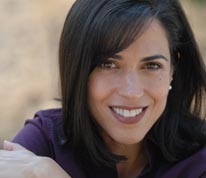
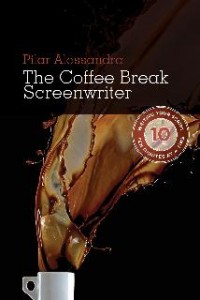
Pilar Alessandra is director of the Los Angeles writing program “On the Page” and author of the newly released The Coffee Break Screenwriter, published by Michael Wiese Productions. She has worked as Senior Story Analyst for DreamWorks and Radar Pictures and has trained writers at ABC/Disney, MTV/Nickelodeon, the National Screen Institute, the Los Angeles Film School, The UCLA Writers Program, and more. Alessandra’s weekly podcast “On the Page” is regularly in the iTunes top 50 of film and tv podcasts. I was fortunate to guest on her Podcast at the beginning of the year – Episode #123.
Alessandra shares advice for screenwriters, podcasters, and those writing non-fiction books. Plus, talks about how she is a very “productive procrastinator!”
Why did you write The Coffee Break Screenwriter?
We’re all busy these days and I see more and more people writing in their “stolen” moments of time. So, the goal of this book is to make those short, focused writing bursts as creative and productive as possible. It helps you be true to the story you want to tell, but also pushes you forward in the process. I’m always blown away by the fantastic results I get with my students when I give them a writing tool in class, then give them ten minutes to get their work on the page. They always nail it.
What was your process for writing it?
I wrote half the book about four years ago, then–like so many writers– ignored the rewrite. Instead, I procrastinated by building more classes, creating an instructional DVD, starting a podcast, touring the country, etc. (I’m the world’s most productive procrastinator). All of that teaching and crafting turned out to be a good thing, though. It helped me develop more writing tools, become a better script analyst, and, finally, get the damned thing finished.
How did you go about getting it published?
Signe Olynk and Bob Schultz from the Great American Pitchfest told Ken Lee at Michael Wiese Productions that if he didn’t publish my book, they would. He listened. They rock.
What was your favorite part of writing The Coffee Break Screenwriter?
Pretending that I was teaching a class as I was writing it. Teaching is my very favorite thing to do, so as I “lectured” the words came.
The greatest challenge?
Fighting that voice that screamed, “Who the hell needs another screenwriting book?” (The answer: “The person who thinks she’s too busy to write. That’s who!”)
Can you give our readers a sneak peek into what you discuss in the book? What are three things writers can do now to get started in short bits of time?
1. Commit 10 minutes to telling a simple story with a great idea. Describe it in a paragraph or two as though telling a friend about a great movie. That’s your synopsis.
2. Commit 10 minutes to dividing that story into four sections. Give each section a title. Those are your acts.
3. Commit 10 minutes to brainstorming the major events that happen in each section. Those are your sequences or “beats.”
Congratulations! You’ve practically outlined your movie.
What can a writer do to stand out from the rest of the crowd of those wanting to get discovered?
Commit, commit, commit. Commit to an idea. Commit to a story approach. Commit to a tone. Stop chasing trends and writing to formula. All a reader wants is something that feels fresh.
What inspired you to start your On the Page podcast?
I knew my On the Page Writer’s Studio had great talent coming out of it, so I thought it would be cool to put some of my clients and students on mike and talk with them about screenwriting. I had no idea anyone would actually listen! When they did, I started including producers, casting people, new media experts, gamers, and more into the conversation. I’ve learned right along with my listeners. It’s been an adventure.
What are the differences between creating your podcast, teaching, and writing a book? Are there any similarities?
The podcast is a discussion. The classes are a workout. The book is a guide. What links them is a respect for the writer. I do believe there are more stories to tell and I’ve witnessed writers get better each year at telling them. They’ve grown up, living and breathing movies and tv, and they have great instincts. All of my workshops and materials acknowledge those natural skills. There’s no dumbing-down.
How do you decide what to cover in which format?
For the podcast, we try new things all the time. We’ve had logline contests, interviews with cops and forensic experts, discussions of movies and even had a contest to “script” the podcast. (That one was pretty terrible, actually). For my classes, I’m focused on what the writers need to accomplish that day. Nail concept? Outline story? Get a scene on the page? Rewrite? I have a responsibility to get them there.
Additional advice for screenwriters?
Stage or film a short piece of work. Showcase yourself!
Additional advice for would-be podcasters?
Don’t take yourself too seriously.
Additional advice for non-fiction book writers?
Enjoy discovering that you actually know something.
What do you know now that you wish you knew at the beginning of your career?
That every script has a surprise in it. And that a short bob was actually not a good look for me.
Tags: DVD Michael Wiese Productions Non-Fiction Book On the Page Pilar Alessandra Podcast Screenwriting The Coffee Break Screenwriter






Comments are closed.
Wow, what a great interview! Comforting to know that successful screenwriters have to deal with procrastination too!Will be checking out On The Page podcasts! Great job interviewing, Debra! Keep up the good work!
Patti
[…] Read the Author Q&As posted since the last newsletter: […]
[…] The Coffee Break Screenwriter by Pilar Alessandra […]
[…] April 13: The next Write On! meeting with guest Pilar Alessandra, On the Page, will be at at 12pm PDT/3 pm EDT on Blog Talk Radio. RSVP on […]
[…] April 13: The next Write On! meeting with guest Pilar Alessandra, On the Page, will be at at 12pm PDT/3 pm EDT on Blog Talk Radio. RSVP on Facebook. (Also, Pilar […]
[…] The Coffee Break Screenwriter: Writing Your Script Ten Minutes at a Time by Pilar Alessandra (Pilar will be the special guest for the Write On! April Meeting on Blog Talk Radio April 13 at 12 […]
[…] April 13: Write On! meeting with guest Pilar Alessandra, On the Page, at 12pm PDT/3 pm EDT on Blog Talk Radio. RSVP on Facebook. (Also, Pilar is doing her […]
When writing Animation if it is for animals, should the script be any different than if you are writing for human characters? Also, with all the animated flicks coming out like Rango, Hop, Rio, etc., is Hollywood looking for the next BIG HIT that deals with cute cuddly Animals – if so that is me!
I have 2 pertinent Questions for Ms. Alessandra for her April 13TH Blog Talk Radio Showgram:
#1: When writing Animation (if it is for animals), should the script be any different than if you are writing for human characters?
#2: With the influx and increase in the animated flicks coming out (and that have already appeared) like Toy Story 1-3, Rango, Hop, Despicable Me, Rio, etc., is Hollywood (circa 2011) looking for the next BIG ANIMATED HIT that deals with cute cuddly Animals/TOYS? With TOY Story 3 winning an Oscar, it seems to be ‘the trend’ from what I can see as an outsider outside ‘the realm and reelm’ of Hollywood dynamics.
MY THINKING HERE EXPLAINED:
I have an ongoing 7-part Series (book and movie extravaganza) that spotlight some of the dreamiest and most darling TOYS taken from my very own TOY BOX. One of the Scripts has already beat out 3,164 others in a Hollywood Intl Screenwriting Competition in 2010; therefore, I know it has ‘something’ going for it. Currently, I am wondering about the best way to get IT walked into Steven Spielberg’s, John Lasseter’s, Tim Burton’s and/or Gore Verbinski’s studios. One look @ my ‘Family’ and they’d be a SHOE-in even if I didn’t have the last 3 Scripts written. Plus, the topics are instrumental today’s issues, the leading subject deals with eliminating RACISM. And what is strange about the copy/text is that once you read the 4/7 that are already written, you will NOT have a bigoted bone left in your body. This is a Message we must get ‘out there.’
And those were my 2 burning questions. Now, they are not BURNING any more! Thank you for your time – have a great Show!
Cheers, ASK: Adrienne Sioux Koopersmith
SKiN: Sacred Kinship in Nature ™
How 10 Beloved Plush Toys Redefine Race ©2009
Featuring: iN THE COMPANY OF ANTS ©2009
Quarterfinalist Winner of Scriptapalooza’s Intl Screenplay Competition: 2010
Beating out 3164 other Scripts
Chicago – IL USA
4-6-2011 – 3 PM
[…] April Write On! meeting with guest Pilar Alessandra, On the Page, is on April 13 at 12pm PDT/3 pm EDT on Blog Talk Radio. RSVP on […]
[…] April Write On! meeting with guest Pilar Alessandra, On the Page, is Wednesday, April 13 at 12pm PDT/3 pm EDT on Blog Talk Radio. RSVP on Facebook. […]
[…] 4. The Coffee Break Screenwriter: Writing Your Script Ten Minutes at a Time by Pilar Alessandra […]
[…] with MWP authors Ellen Besen (Animation Unleashed) and Aubry Mintz (Ideas for the Animated Shorts), Pilar Alessandra (The Coffee Break Screenwriter), and Steven Kaplan (The Hidden Tools of Comedy); purchase MWP books […]