
Multi-faceted writer Magdalena Ball runs The Compulsive Reader website; she also hosts an internet radio show by the same name. Her short stories, editorials, poetry, reviews, and articles have appeared in a number of printed anthologies and journals.
Ball is also the author of the novel Sleep Before Evening, the non-fiction book The Art of Assessment: How to Review Anything, and the poetry book Repulsion Thrust, as well as three other poetry chapbooks: Quark Soup, and—in collaboration with Carolyn Howard-Johnson—Cherished Pulse and She Wore Emerald Then. Their third collaboration Blooming Red—which contains Christmas poems—will be out in the next month or so.
Ball speaks with Write On about her passion for writing and experience with collaboration, and offers advice for poets, noevlists, and multi-taskers.
Magdalena Ball and Write On! Online are part of the VBT Writers On the Move Blog Tour. Heidi Thomas is hosting Heather Paye tomorrow. Please check out the VBT Website for more exciting author interviews and expert columns!
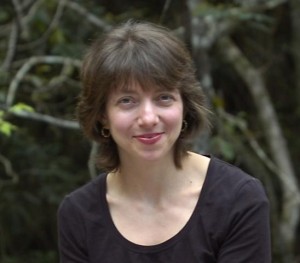
What is your favorite part of being a writer? The greatest challenge?
My favorite part of being a writer is the way in which writing forces you to look closer at the world around you—to examine every little detail for its fullest meaning.
The greatest challenge is making sure I take the time to do this—and to create big, difficult, challenging projects—to push myself into uncomfortable areas in the face of continual distraction.
Do you have a favorite genre/medium? Why?
I tend to love poetry best: it’s the most concentrated form that is the deepest, most emotive, intuitive—it cuts closest to the moment of experience. As a writer, it’s a form I get great pleasure out of writing in. However, I’m drawn, in a broad sense, to literary fiction, because it’s the hardest to master (as writer), and the most intensive for a reader. There’s nothing quite like being lost in the fictive dream—someone else’s world—and, as a writer, taking a reader into that world is something I’m drawn to.
How has having an education in both the states and abroad (Ball grew up in the United States, and now lives in the UK) aided in your development as a writer?
I do think that living in a country, which isn’t the one I grew up in, has broadened my perspective. I was much more insular when I first left the US than I ever would have imagined myself. Being forced to take a global perspective and to re-imagine who I am in a different context has been a positive thing for me as an person, I think, and that translates into the way I interpret my world as a writer.
How do you approach the blank page?
I don’t usually open a blank page with a blank mind! Often I’ll have some idea; some visualization in my head about what is going to fill that page before I approach it. So I’ll begin with some idea or some scenario or a set of character interactions that have been playing about for some time before I’m ready to get them out onto the page. Then I’ll start by messing about with language until the overall shape of what I want to do starts clarifying for me.
You do a lot of collaboration. What is your process? What advice would you have for someone thinking of collaborating with another writer?
I love the collaborative process—maybe too much because I’m always willing to be distracted from the longer term solitary endeavors by a good collaborative opportunity. The process will generally depend on who I’m collaborating with. If it’s someone new, there will often be a brainstorming meeting (face-to-face if possible) to begin by identifying the scope of what we want to cover, and then we’ll each work separately on our parts and then come together again to share work, ideas, and directions. The thing I like about it most is that you’ve got built in critique, support, and a kind of external deadline—it really mitigates some of the bigger writing challenges. I’d say, by way of advice, that it’s important to always be open.
Please talk about The Compulsive Reader? What is your process for managing the content on the site?
The Compulsive Reader has been running for some ten years—a long time in Internet terms! I manage the site entirely myself still, choosing what to include and hand coding each review. However, I do have about 20 reviewers (about six really prolific ones) who review for me, which has given the site a nice balance and variety and lots of regular content. I send out a monthly newsletter which has ten new reviews in it each month—mostly new release literary fiction, but we also have the best chess review section around, lots of poetry, and non-fiction books too. I do love book reviewing—it’s like a second, deeper reading, and CR has enabled me to feed my habit and justify speaking to some amazing authors.
How do you balance all your different projects? Any tips or techniques?
I have too many projects to be quite frank, but I find it very hard to say no to projects that interest me and most things do! My only suggestion other than “don’t emulate me,” is to make sure that whatever I’m doing, I’m doing it as if it were the only thing that I was doing. So I try to focus in hard on whatever I’m specifically looking at rather than skimming everything on the surface (and then doing it all badly). That might mean that some things take longer than I would like—my second novel for example, is way overdue, but that’s a project that I can’t rush, and won’t rush. It needs full attention.
Advice for poets?
Always shift your gaze a bit to the left. There’s inspiration in detail, in the unseen, in each molecular shiver.
Advice for novelists?
I need that advice! Just keep pushing forward at whatever pace works for you and keep sight of the big picture. Also, and this is important and easy to forget when you’re in the throes of it, don’t become critical too soon. It’s the heart of writer’s block—being too critical of first-draft writing is a show stopper that can cause all sorts of difficulty with a large project like a novel. Just keep at it and expect the work to become great only in the re-writing.
What do you know now that you wish you knew when you first started writing?
Time only contracts as you get older! So relying on having more time to write tomorrow is a mistake! You have to write now because tomorrow you’ll be busier.
Tags: Author Q&A Carolyn Howard-Johnson Cherished Pulse Debra Eckerling Magdalena Ball Quark Soup Repulsion Thrust She Wore Emerald Then Sleep Before Evening The Art of Assessment The Compulsive Reader VBT - Writers on the Move Write On! Online





Comments are closed.
Maggie, love the bit about writing now .. it sure is the truth. Want to sign my petition for 36 hour days?
Isn’t interviewing Magdalena lov–er-ly? Thank you to two talented women I admire. You may want to check out the first little booklet of love poetry Maggie and I did together at http://www.budurl.com/CherishedPulse.
Best,
Carolyn
I really like this …
Always shift your gaze a bit to the left. There’s inspiration in detail, in the unseen, in each molecular shiver.”
Looking for the unseen, which is usually quite visible, can add a deeper perspective to communicate to the reader that can enrich dialogue or narration. Its a matter of taking a moment to look around, pay attention to your surroundings, and see something that is crying out, “Use me, I’m important!”
Stephen Tremp
Maggie can speak for most writers, and her advice is good for all of us, no matter what genre we write in. Thanks for sharing it.
Another interesting interview. I’m amazed that you can keep up with so many big projects and still have time to write.
Debra and Maggie:
Great interview. I loved what Maggie said about writing now. I find myslf in that “I’ll do it tomorrow” mode with my writing sometimes. And tomorrow is truly always busier! Excellent advice.
Maggie is always full of great advice and this interview was I needed to read to get me motivated again. Thanks.
Thanks for being a wonderful host, Debra – for your insightful questions especially, and to those of you who took the time to comment. Margaret, I’ll sign that petition but I’m not sure who you’re gonna send it to!
Wonderful interview with great advice! I love your answer to the question about the blank page 🙂
Maggie, you never fail to inspire me! Loved this interview. Thank you!
Great interview! Maggie, I’ve enjoyed your Internet radio show and your poetry is truly magical.
Thanks, everyone, for stopping by, and for your lovely comments. And thank you, Maggie, for sharing your advice, experience, and passion for writing with my readers!
“tomorrow you’ll be busier.” Amen to that truth. Maggie, it’s always true.
What great interview I always learn something from you.
Martha
Great interview, ladies. And, I agree, never put off for tomorrow what you can do today!
Terrific interview. I especially like that you don’t approach a blank page with a blank mind. Wonderful.
Maggie, I agree with Stephen. I, too, love your advice about looking at things slightly to the left.
I do a lot of dance choreography and that advice applies to dance as well. And to photography!
I’d admire your ability to multi-task so well.
Please let me sign that 36 hour day petition.
Wonderful interview; loved that even in an interview she couldn’t resist the poetic “in each molecular shiver.” And loved the wisdom of don’t wait; you’ll just be busier. The only problem with the 36 hour day is how would you decide what was daytime and what was night? Also, you would just pack in so much more that soon you would need a 48 hour day!